
Algo strategies must be registered with stock exchanges.

'I own a few cars that I have had specified minutely to my taste, and it does feel nice to know that there are no other vehicles like them anywhere in the world.'

The case for long-term investment in gold, however, remains intact.

The EoI comes at a time when ISRO is working to enhance LVM3's payload capacity to five tonnes in GTO and is also evaluating the procurement of a Russian semi-cryogenic engine for the vehicle's second stage.
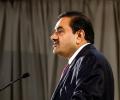
Adani group companies reported a record capital expenditure of Rs 1.53 lakh crore (USD 16.1 billion) and an all-time high EBITDA of Rs 94,834 crore (USD 10 billion) in the 2025-26 fiscal year, signalling an accelerating infrastructure expansion cycle while maintaining leverage below its stated target.

State-owned enterprises in India are projected to significantly increase their overseas borrowings, potentially exceeding $15 billion in FY27, driven by the Reserve Bank of India's new concessional forex swap facility which offers a 3 per cent funding-cost advantage.

Investors can begin investing in mutual funds with as little as Rs 100.

The Reserve Bank of India (RBI) and the central government have introduced a package of measures, including tax exemptions for FPIs on government securities and a concessional foreign-exchange swap facility, aiming to attract up to $50 billion in foreign capital. This initiative is designed to strengthen India's balance of payments and potentially cover the projected BoP gap for FY27.

Ongoing geopolitical tensions in West Asia have slowed deal momentum in Dubai's luxury residential market, but Indian high-net-worth individuals (HNIs) are not exiting their marquee assets, with any 'discounted' resale deals attributed to investor liquidity stress rather than geopolitical flight.

RIS Steady Life Cycle begins with an equity allocation of 35 per cent at age 60, which gradually reduces. Between ages 75 and 85, it remains constant at 10 per cent.

The country's billionaire count rose 58 per cent over the past five years to 207 in 2026.

The central bank is yet to consider actions such as a rate hike or mobilising dollar inflows from non-resident Indians to boost forex reserves as it cannot afford to continue with them for long when the rupee's internationalisation tops its agenda, explains Tamal Bandyopadhyay.

Reliance Industries Ltd reported a 12.5 per cent fall in its March quarter net profit, primarily impacted by the global energy crisis affecting its oil and chemicals business, while its consumer-facing Jio Platforms unit saw a 13 per cent increase in profit after tax.

The Reserve Bank of India's (RBI) cap on banks' forex positions provided only a temporary boost to the rupee, with the currency quickly reversing gains and breaching the 95-per-dollar mark due to persistent underlying pressures.

FMCG major Hindustan Unilever Ltd (HUL) reported a 21 per cent increase in its March quarter consolidated net profit, reaching Rs 2,994 crore, primarily driven by higher volumes and a significant gain from the divestment of its stake in Nutritionalab.

"It is quite possible that the rates will remain low in the near to medium term, but that will depend on how conditions evolve," said RBI Governor Sanjay Malhotra.

Bajaj Auto reported a significant increase in its consolidated Q4FY26 performance, with profit after tax more than doubling to approximately 3,662 crore, a 103 per cent year-on-year rise, primarily driven by record volumes, an improved product mix, and the strategic consolidation of Bajaj Auto International Holdings AG (BAIHAG).

'It has always been viewed as a hedge against inflation.'

With duties at 15%, GST at 3%, and making charges running as high as 20% -- the gap between a smart purchase and a careless one can easily be Rs 30,000 to Rs 50,000 on every Rs 1 lakh invested. And most of that gap is entirely avoidable. Ramalingam Kalirajan explains the math.
Hindustan Unilever (HUL) exceeded consensus estimates in Q4FY26, driven by lower overheads and 6 per cent consolidated volume growth. However, the company anticipates further price hikes to counter an expected 8-10 per cent material cost inflation, while maintaining a mid-term margin guidance of 22.5-23.5 per cent.

CRISIL Ratings predicts that the share of bank loans in NBFCs' overall borrowings will increase to 44-45 per cent by FY27, driven by elevated bond yields and softening bank lending rates.

rediffGURU Jinal Mehta answers readers' financial planning and health insurance queries

The Reserve Bank of India (RBI) on Friday announced a set of liquidity measures through open market operations (OMOs), dollar-rupee buy-sell swaps, and long-term variable rate repo (VRR) operations, in a bid to infuse liquidity into the banking system.

Domestic institutional investors, on the other hand, made a net investment of Rs 1.13 trillion during this period.

The conflict may disrupt Budget 2026-2027 projections, squeezing revenues and raising subsidies, prompting fiscal adjustments and potential reforms, echoing lessons from the Covid-era shock, points out A K Bhattacharya.

The Indian rupee experienced a significant surge against the US dollar following the Reserve Bank of India's measures to restrict banks from onshore forward markets. Despite this, the rupee remains under pressure from foreign capital outflows, a strong dollar, and rising crude oil prices.

'Except for extremely conservative investors, others can consider allocating 10 to 20 per cent of their portfolio to small caps.'
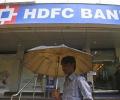
HDFC Bank, India's largest private-sector lender, has revised its FY27 growth trajectory, stepping back from earlier guidance to align with a more measured 12 per cent year-on-year expansion, citing geopolitical uncertainties.

Uncertainty stemming from the US-Iran conflict has significantly impacted India's mutual fund industry, leading to a sharp decline in new fund offers (NFOs) in March, despite numerous regulatory approvals. This geopolitical tension, coupled with existing market strain and distributor hesitation, has dampened investor sentiment and affected overall inflows.

The easing of external commercial borrowing (ECB) norms by the Reserve Bank of India (RBI) is expected to significantly boost overseas fundraising by Indian companies, market participants said.
Foreign investors have withdrawn over Rs 88,000 crore from Indian equities this month, driven by geopolitical tensions, a weak rupee, and concerns about rising crude oil prices.

Reserve Bank on Friday decided to cut Cash Reserve Ratio (CRR) by a huge 1 per cent, which will unlock Rs 2.5 lakh crore liquidity to the banking system for lending to productive sectors of the economy. With the reduction in four equal tranches ending November 29, 2025, the CRR would come down to 3 per cent.

Aditya Birla Group's Hindalco Industries on Friday reported a 21.3 per cent year on year rise in its consolidated net profit to Rs 4,741 crore in the second quarter of 2025-26 (Q2FY26), driven by its Indian business and its US-based subsidiary, Novelis.

The Indian rupee rebounded against the US dollar after the Reserve Bank of India (RBI) restricted banks' net open positions in dollars. This move prompted banks to sell dollars, providing temporary support for the rupee amidst ongoing geopolitical tensions and rising oil prices.

The Reserve Bank of India (RBI) Governor Sanjay Malhotra is now confronting the classic growth-inflation tradeoff, a situation exacerbated by the West Asia war, which threatens to end the 'goldilocks period' of low inflation and robust growth.

Adani Power on Thursday posted a 12 per cent decline in consolidated net profit to Rs 2,906 crore in the September quarter, driven by a rise in expenses. It had clocked a net profit of Rs 3,297.52 crore in the July-September period of the preceding 2024-25 financial year, the Adani Group entity said in an exchange filing.

In the present hyper-connected world, there are many domestic and global factors that affect financial markets. Of them, the most powerful and often least predictable are geopolitical events, which often boil down to one diplomatic headline.

The government bond yield curve is likely to flatten in the financial year 2027 (FY27) as the Reserve Bank of India (RBI) is expected to ease supply pressure in the ultra-long segment. In FY26 so far, reduced investments by insurance companies and pension funds pushed up yields on ultra-long tenor securities, steepening the curve.

In November, six primary market issuances accounted for more than 13,000 crore of net equity investments by MFs.

Indian equity markets experienced a volatile trading day, with the Sensex and Nifty closing almost flat. Market sentiment was influenced by global cues, US-Iran talks, and profit-booking activities.
